Most radon mitigation systems in York County use a method called active sub-slab depressurization, sometimes shortened to ASD or SSD. The idea is simple: instead of trying to block every crack radon could use, the system makes the soil below your home a lower-pressure area than the inside of your home, so radon is drawn away and vented outside.
The Problem: Your House Pulls on the Soil
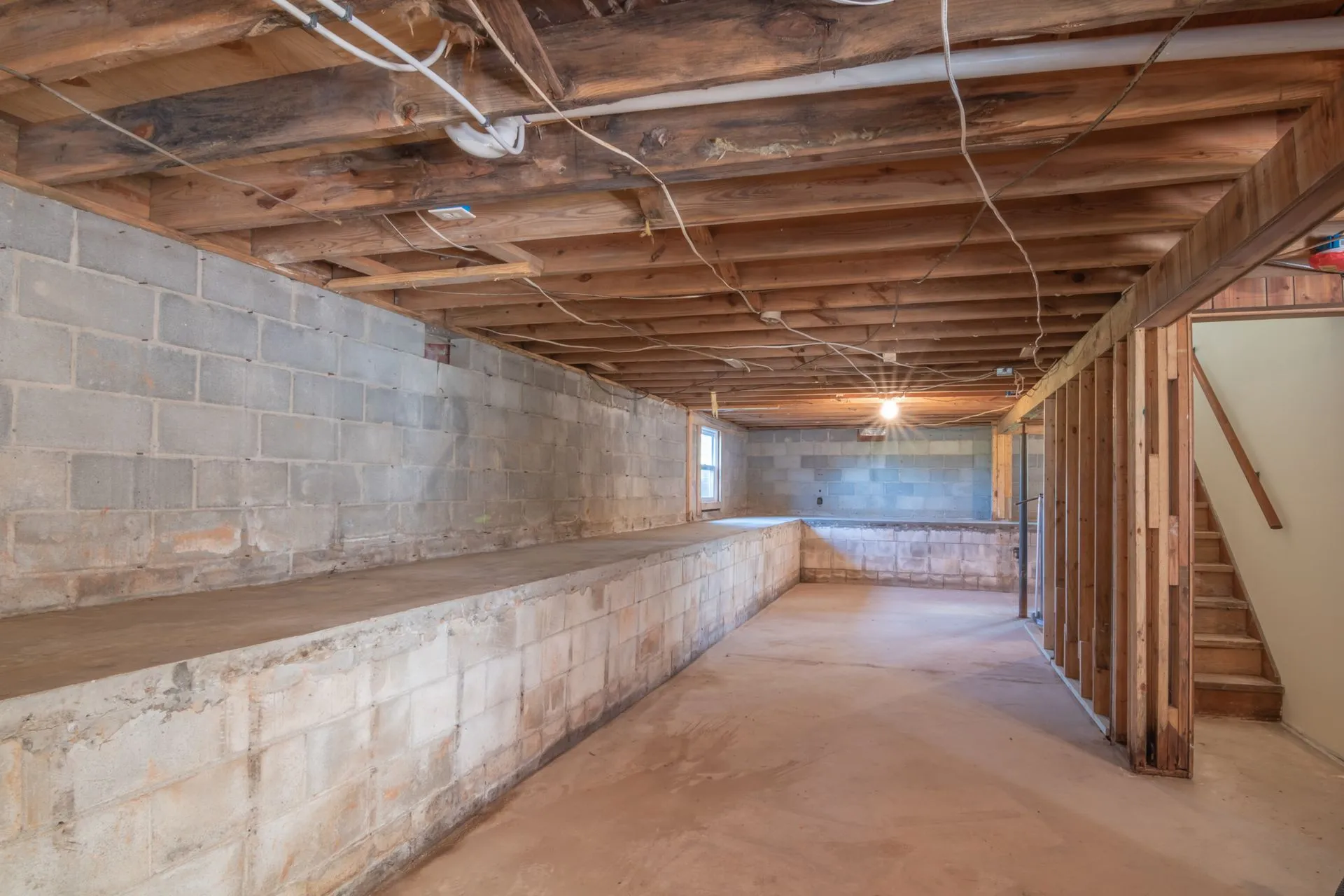
Warm air inside a house rises and leaks out through upper floors, especially during York’s heating season. That draws replacement air in at the bottom of the house, including soil gas through cracks, joints, sump pits and block walls. Radon rides along with that soil gas.
The Solution: Lower Pressure Below the Slab
A sub-slab system reverses that pull. Here is what each part does:
- Suction point. A hole is cored through the basement slab and a small pit is dug in the gravel or soil below. This gives the fan more area to draw from.
- Sealed PVC pipe. Pipe is sealed into the slab and runs up through the house, garage or along an exterior wall.
- Radon fan. An inline fan, mounted outside the living space, creates continuous suction on the pipe and the soil below the slab.
- Discharge above the roofline. Radon is exhausted above the eave, away from windows, doors and air intakes.
- Sealing. Accessible cracks, the floor-wall joint and the sump lid are sealed so the fan pulls from the soil, not the basement.
- Manometer and label. A U-tube manometer shows the system is under suction, and a label identifies the system.
Why Sub-Slab Communication Matters
Suction has to reach across the area below the slab. Homes built on clean crushed stone often need just one suction point. Homes with tight soil, grade beams, additions or old stone foundations may need more. A communication test during the design visit measures how far suction travels before the fan and number of suction points are chosen.
Sump Pits and Drain Tile
Many York basements have a sump pit connected to perimeter drain tile. When the sump is sealed with an airtight cover, the drain tile can act like a pipe loop around the whole foundation, and suction through the sump can reach a large area. See basement radon mitigation for details.
Crawl Spaces and Block Walls
Crawl spaces get a sealed plastic membrane with suction below it, called sub-membrane depressurization. Hollow block walls sometimes need their tops sealed or their cores placed under suction. These methods are often combined with slab suction in a single radon mitigation system installation.
How Well It Works
The EPA reports that active soil depressurization can reduce radon levels by up to 99 percent, and the EPA radon information for homeowners describes it as the most common and effective approach. In Pennsylvania, radon mitigation work falls under the Pennsylvania DEP Radon Division, which certifies radon mitigators.
How to Tell It Is Working
- The manometer liquid is uneven and stays at a consistent reading.
- The fan has a steady, low hum.
- A post-mitigation radon test, run after at least 24 hours of operation, shows the new level.
- Retests every two years stay low.
If the manometer drops to level, the fan goes quiet or a retest rises, schedule radon fan replacement or radon system repair. Not sure where you stand? Start with radon testing, or visit the RM York home page.
- #sub-slab depressurization
- #radon mitigation system
- #radon fan
- #RM York