Basements With a Sump Pit
The sump is sealed with an airtight lid and often used as the suction point, drawing radon from the perimeter drain tile.
Radon solutions for York County basements
Sump Pit Radon Sealing · Finished Basement Radon System · Stone Foundation Radon Mitigation
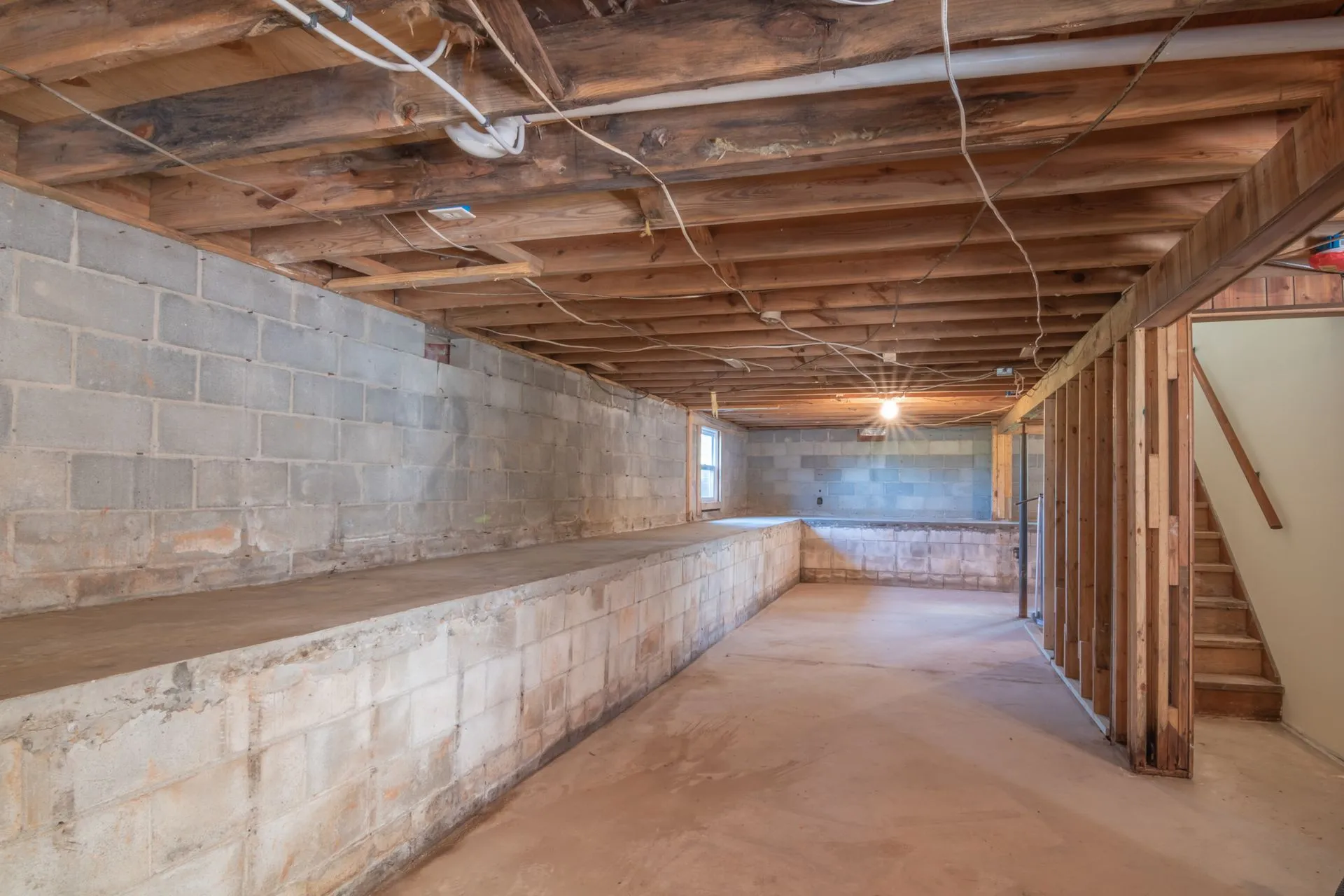
Basement radon mitigation from RM York targets the level of your home where radon enters first and concentrates most. We seal the sump pit with an airtight cover, apply suction below the basement slab or through perimeter drain tile, seal accessible cracks and joints, and vent the radon above the roofline. The result is a lower radon level in your basement and the rooms above it, confirmed by a post-mitigation radon test.
Free estimateStandards-based installationPost-mitigation test
4.0
pCi/L EPA action level
fix homes at or above this level
1 Day
Typical installation
for most York homes
14
Nearby communities
plus every York neighborhood
PA DEP certified radon mitigation
Who you are calling
Basements are where most York homes have their highest radon levels. The slab sits directly on soil and gravel, the floor-wall joint is rarely airtight, sump pits connect straight to the drain tile, and block or stone walls let soil gas move through them. A basement radon mitigation system turns those weak points into a controlled path out of the house.
We plan the system around how you use the space. In unfinished basements, the suction point and pipe go where they are easiest to route. In finished basements, we look for utility rooms, closets and exterior routes that keep the system out of sight while keeping the suction point and manometer accessible.
When to call
Radon cannot be seen or smelled, so the clues are in your test results, your system and your foundation. Note your latest radon number and when the test was taken.
 (717) 275-0074
 A basement or lowest-level radon test at or above 4.0 pCi/L is the clearest sign. The EPA also suggests considering mitigation between 2.0 and 4.0 pCi/L.
An uncovered sump connects your basement air directly to the soil and drain tile around the foundation, one of the easiest paths for radon.
Adding a bedroom, office or family room means more hours in the highest-radon level of the home. It is far easier to install a system before walls go up.
Visible cracks, open block cores and deteriorating mortar in stone walls allow soil gas to enter through the foundation walls, not just the floor.
The right method for the home
York County has a wide mix of basement construction. Each type needs a slightly different approach.
The sump is sealed with an airtight lid and often used as the suction point, drawing radon from the perimeter drain tile.
A sub-slab suction point in a clean, crushed-stone base can often lower radon throughout the basement with one fan.
Hollow block cores can carry radon into the basement. Top-course sealing or wall suction may be added to slab suction.
Older York city homes with fieldstone walls need extra sealing and careful fan sizing because the walls themselves leak soil gas.
Systems are routed through unfinished areas, closets or exterior walls, with access panels kept for the suction point.
A sealed vapor membrane with sub-membrane suction ties the crawl space into the basement system.
What you get
Every job includes all of the following. Nothing here is an extra added on once we are already at your home.
We inspect the slab, sump, drain tile, walls, floor-wall joint and penetrations, and run a sub-slab communication test.
An airtight sump cover is installed and the suction point is placed where it reaches the most of your foundation.
A radon fan outside the living space pulls soil gas through sealed PVC pipe and vents it above the roofline.
After at least 24 hours of operation, a radon test in the basement confirms the reduction.
How the job runs
Every Basement Radon Mitigation job follows a home-specific plan, from the first radon number to the verified result.
We review your radon result and inspect the basement slab, sump, drain tile and walls.
We choose suction points and a pipe route that work for your foundation and how you use the basement.
The sump is sealed, cracks and joints are closed, and the suction point, pipe and radon fan are installed.
A post-mitigation radon test in the basement confirms the new level, and we show you how to monitor the system.
RM York · Local radon specialists
Tell us about your basement: sump pit, block or stone walls, finished or unfinished. We will recommend the right basement radon mitigation approach.
Upfront pricing
Typical ranges for basement radon systems in York County homes.
$1,150+ basement with sump and drain tile
$1,500+ concealed interior routing
$1,800+ walls that leak soil gas
Pricing depends on foundation construction, sub-slab communication, finished areas and the pipe route, and is confirmed in writing before work begins.
Health and household safety
Lower radon in the basement lowers radon in the rooms above it, too.
Bedrooms, playrooms and home offices in finished basements are where lowering radon has the biggest effect on daily exposure.
Airtight sump covers are designed with removable lids and sealed pass-throughs so pumps can be serviced and resealed.
Sub-slab suction can also reduce soil moisture moving into some basements, though it does not replace waterproofing.
Before, during, after
Most basement radon mitigation projects are completed in one day. We core the slab, install the sump cover, seal accessible cracks and joints, run the pipe and mount the radon fan. Dust from coring is controlled with a vacuum.
The system runs continuously from the start. After at least 24 hours, a post-mitigation radon test in the basement confirms the new level. Keep the sump lid sealed and check the manometer monthly.
Keep radon levels low
Your basement radon system works best when the basement stays sealed and accessible.
Keep the sump cover bolted and sealed, and ask anyone servicing the pump to reseal it.
Seal new floor or wall cracks as they appear, especially after settling or plumbing work.
Plan access panels for the suction point and manometer before finishing any basement walls.
Retest the basement at least every two years and after any renovation or foundation repair.
York, PA local insight
York County basements come in every style. Row and twin homes in the City of York often have fieldstone or rubble walls with dirt-floor sections that were later covered with concrete. Mid-century homes in Springettsbury, West York and Spring Garden commonly have block walls and older sump pits. Newer homes in Dover, Shrewsbury and Manchester Township usually have poured walls, perimeter drain tile and a sump basin that makes an excellent suction point once it is sealed.
Because radon rises from the soil, the basement is almost always where it enters and concentrates. York County’s location in EPA Zone 1, the highest radon potential category, means basements here deserve a radon test, especially before finishing a lower level or using it as a bedroom or office.
Start with reliable radon testing in the basement. If the result is high, basement radon mitigation uses the same active approach as a full radon mitigation system installation, with extra attention to sump sealing, drain tile and wall construction.
If your basement already has a radon pipe but the level is creeping up, a radon system repair visit often finds an open sump lid or a leaking coupling, and a failing fan can be handled with radon fan replacement. To understand how suction below the slab works, read how sub-slab radon mitigation works, or visit the RM York home page.
Independent guidance: review the EPA guide to the health risk of radon (opens in a new tab) and the Pennsylvania DEP Radon Division (opens in a new tab) . These resources complement your radon test results and the written scope for your home.
Local radon standards
We combine accurate radon data, a system designed for your foundation, clean installation and a follow-up test that proves the result.
Sump pits, drain tile, block walls and old stone foundations are the everyday reality of York County basements.
We plan pipe routes that protect finished walls and ceilings while keeping key components accessible.
A post-mitigation radon test and a working manometer give you proof that your basement radon level is down.
Where we work
RM York serves every York neighborhood plus Hanover, Red Lion, Dallastown, Dover, Shrewsbury, Spring Grove, Glen Rock, Manchester, New Freedom, Seven Valleys, Stewartstown, Windsor, Wrightsville, York Haven. Call with your address to confirm the next available appointment.
York ZIP codes served
RM York · Basement Radon Mitigation
54 W Market St, York, PA 17401
Monday to Friday: 8:00 AM to 6:00 PM
Straight answers
Need help with a detail not covered here? Call (717) 275-0074.
 (717) 275-0074
 Usually, yes. Radon enters from the soil, so basements and the lowest levels of a home typically have the highest concentrations. That is why radon tests are placed in the lowest livable level.
Sealing helps, but the EPA does not recommend sealing alone as a radon reduction method. It is used together with active sub-slab suction to lower radon reliably.
Yes. We route pipe through utility rooms, closets, garages or the exterior and keep access to the suction point and manometer, so finished spaces stay intact.
Your sump pump keeps working. We install an airtight, removable cover with sealed openings for the discharge pipe and cord, so the pump can still be serviced.
Yes. Radon that enters the basement moves up into the rest of the home. Stopping it at the foundation lowers radon levels on every floor.
Free estimate · Written quote
Seal the sump, stop radon at the slab and vent it above the roof. Call RM York for a basement radon system and a post-mitigation test that proves the result.