
Short-Term Home Radon Test
A continuous monitor runs 48 to 96 hours and gives you a quick, dependable picture of the radon in your house right now.
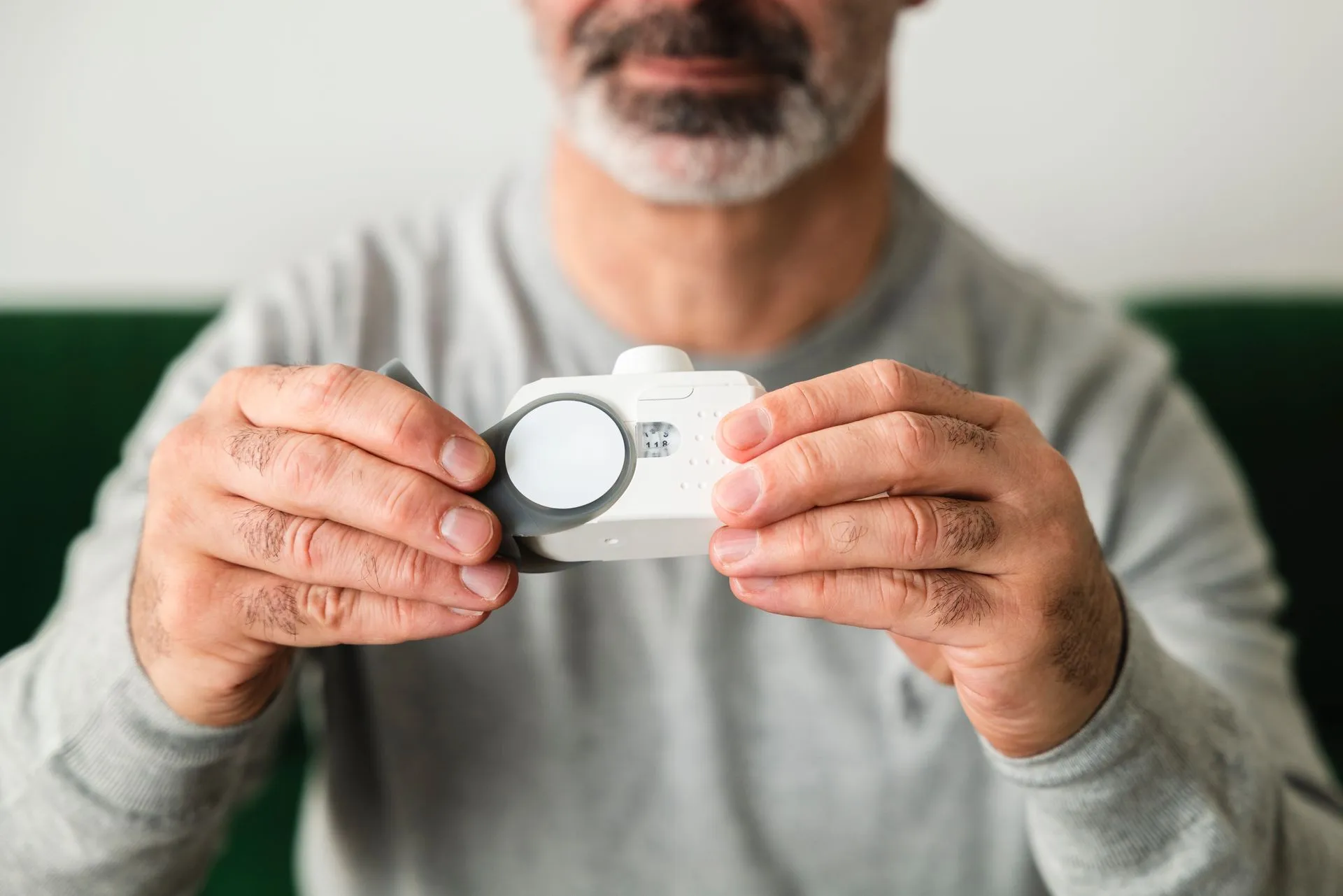
Continuous radon monitor testing in York, PA
Home Radon Test · Real Estate Radon Testing · Post-Mitigation Radon Test
A radon test is the only way to learn how much radon is in your house. Our certified team sets a calibrated continuous monitor in the lowest level you live in, runs it for at least 48 hours, and logs a reading every hour. The average gets compared against the Environmental Protection Agency (EPA) action level of 4.0 picocuries per liter (pCi/L). Some homes need nothing. Others need a system. Pennsylvania requires DEP certification to work on radon for hire, and Radon Mitigation York is a PA DEP-certified firm.
Free estimatePA DEP-certified mitigation firmPost-mitigation test
4.0
pCi/L EPA action level
fix homes at or above this level
1 Day
Typical installation
for most York homes

PA DEP certified radon mitigation
Who you are calling
A radon test is only as good as the way it is set up. Height off the floor matters. So does the distance from outside walls and sump pits, whether the house stayed closed, and how long the monitor ran. Change any one of them and the number changes too. Our certified team follows EPA and Pennsylvania placement protocols, writes down the conditions, and points out anything in the room that could skew the reading.
A continuous monitor logs radon once an hour, so you see the whole pattern instead of one flat average. A window cracked open on day two shows up. So does a storm front or a sudden spike. That record is what makes the report worth something to a homeowner, a buyer or a listing agent.
PA DEP data
Basements read higher than first floors across York County: 33.4% of first-floor tests reached 4.0 pCi/L, against 56.4% of basement tests. Test the lowest level you use.
Source: Pennsylvania DEP, data.pa.gov. Retrieved October 21, 2026.
When to call
Radon cannot be seen or smelled, so the clues are in your test results, your system and your foundation. Note your latest radon number and when the test was taken.
 (717) 275-0074
The EPA recommends testing every home. Levels jump around from one address to the next, even on the same York street, so a neighbor result proves nothing about yours.
Testing inside the inspection period hands both sides a documented number and leaves room to arrange a system before the closing date.
Turning a basement into a bedroom, office or playroom means someone now spends hours in the level that usually holds the most radon.
Foundations settle, fresh cracks open and fans wear out. The EPA recommends retesting at least every two years, mitigated or not.
The right method for the home
Different situations call for different tests. The right one answers your question fastest without cutting corners.
A continuous monitor runs 48 to 96 hours and gives you a quick, dependable picture of the radon in your house right now.
Timed around your inspection period, with setup notes and hourly data that buyers, sellers and agents can all review.
Run once a new system has been pulling for at least 24 hours, to record how far the level actually dropped.
What you get
Every job includes all of the following. Nothing here is an extra added on once we are already at your home.
You get closed-house conditions for the 12 hours before the test and all the way through it, so the number reflects how you really live.
The monitor goes in the lowest lived-in area at the right height, well away from walls, windows, vents and the sump pit.
You get the average plus every hourly reading, so any odd swing or disturbance is easy to spot on the chart.
Your average is compared to the EPA action level and, when the number calls for it, the next step is a written mitigation quote from our crew.
How the job runs
Every radon test follows a home-specific plan, from the first radon number to the verified result.
Send your ZIP and your calendar or inspection deadline. Our PA DEP-certified team calls to book and sends closed-house instructions.
The continuous monitor goes in the correct spot, gets switched on, and the conditions in the room are written down.
The monitor records radon every hour for at least two full days while the house stays closed up.
We collect the monitor, sends the report, and explains whether your home needs a radon system or simply a retest later.
Free estimates · PA DEP-certified radon mitigation firm
Tell us whether this is for your own home, a purchase or a sale, and give us your deadline. Our certified team will call to find a time to place the monitor.
Upfront pricing
Typical costs for the three tests York homeowners ask for most. We confirm your price in writing.
$175 48-hour continuous monitor
$195 timed to your inspection period
$150 after a new or repaired system
These typical costs cover single-family homes in York. Apartment buildings, multi-unit property and rush scheduling are quoted separately by us.
Health and household safety
Radon is invisible, has no smell, and turns up in every state in the country. Testing is cheap and quick, and nothing else tells you what you are breathing.
The EPA action level sits at 4.0 pCi/L, or 148 becquerels per cubic meter (Bq/m³). The agency suggests fixing homes between 2.0 and 4.0 pCi/L as well, since every level of radon carries some risk.
Radon gathers in basements and ground-floor rooms, which is exactly why the monitor belongs in the lowest level you actually use.
The monitor sits quietly on a table or shelf for two days. No drilling, no chemicals, no change to your routine.
Before, during, after
Keep the house closed for the whole test, leave the monitor exactly where it was set, and live normally. Do not aim a fan or dehumidifier at it, and do not unplug it to free up an outlet.
We pick up the monitor, pull the hourly data and walk you through the average. At or above 4.0 pCi/L, the next step is a written mitigation quote from our crew. Many homeowners do the same between 2.0 and 4.0 pCi/L when they want the number lower.
Keep radon levels low
A few habits make every test you ever run more useful.
Test the lowest level you truly use, including a finished basement or a lower-level family room.
Retest after a big remodel, a new addition, foundation repair, or any change to heating and ventilation.
File every radon report with your house records. Future buyers and insurers ask for them.
Already have a system? Retest at least every two years to confirm the fan is still doing its job.
York, PA local insight
Radon forms when uranium in soil and rock breaks down. York County sits in EPA Zone 1, the highest radon potential category on the EPA map of radon zones (opens in a new tab). Radon still changes from one property to the next, so testing your own address is the only way to learn your own number.
The Pennsylvania Department of Environmental Protection (DEP) reports on its radon in the home page (opens in a new tab) that approximately 40 percent of homes tested in Pennsylvania have radon above the EPA action level of 4 pCi/L. York County lies in the Piedmont region, where the rock and the soil above it hold small amounts of uranium, so a newer house here needs a test as much as an older one. Anyone testing for hire in Pennsylvania must hold DEP certification under 25 Pa. Code § 240.
The way houses are built around here makes placement matter. Older city rowhomes often sit on fieldstone or rubble walls. Plenty of homes in West York, North York and East York have block basement walls and open sump pits. Newer developments mix full basements with slab additions and crawl spaces under back rooms. Every one of those foundations lets soil gas in through a different path, so the monitor has to go in the right place for that house.
If your result comes back at or above 4.0 pCi/L, the next move is a radon system installation built around your foundation type. A basement with a sump pit usually calls for basement radon mitigation and a sealed, serviceable sump lid. If a system is already in place and the level has crept back up, radon system repair or radon fan replacement is often all it takes.
Buying or selling right now? The guide to radon testing when buying or selling a York home covers timing and what a high number does to a deal, and the other radon guides explain York County levels and how systems work. To book a test with our certified team, start at radon mitigation in York.
Local radon standards
We combine accurate radon data, a system designed for your foundation, clean installation and a follow-up test that proves the result.
Pennsylvania requires DEP certification to work on radon for hire. Radon Mitigation York is a PA DEP-certified firm. Ask us for our certification number.
Placement, conditions and hourly data should all go on the record, so the result holds up when a buyer or agent asks questions.
If the number comes back high, the same team can quote and install a system for you.
Where we work
We cover York and its bordering neighborhoods: West York, North York, East York, Valley View, Grantley. Call with your address to confirm the next available appointment.
York ZIP codes served
Radon Mitigation York
805 E Prospect St, York, PA 17403
Mon to Fri: 8:00 AM to 6:00 PM · Saturday: 9:00 AM to 2:00 PM
Straight answers
Need help with a detail not covered here? Call (717) 275-0074.
 (717) 275-0074
A standard short-term professional test runs a continuous monitor for at least 48 hours. Closed-house conditions begin 12 hours before that clock starts and hold until we collect the device.
Indoor air across the United States averages about 1.3 pCi/L (48 Bq/m³), while outdoor air runs near 0.4 pCi/L (15 Bq/m³). The EPA recommends fixing a home at 4.0 pCi/L (148 Bq/m³) or higher, and suggests considering mitigation between 2.0 and 4.0 pCi/L.
Either season works for a radon test. Levels run higher through the heating season, when the house stays shut, which is part of why closed-house conditions are required for every short-term test.
Yes, a store-bought kit works as a first look and runs $15 to $50. For a real estate deal, or any decision about spending real money, go professional. A monitor gives you hourly data and documented conditions instead of one mailed-in average.
Yes, new construction needs a radon test. New homes in York County test high, and a house built with passive radon piping still needs a test to show whether that pipe requires a fan.
Our own team at Radon Mitigation York, a firm certified by the Pennsylvania Department of Environmental Protection (DEP). We place the monitor, run the test and issue the report.
Free estimate · Written quote
Find out where your house really stands with a 48-hour continuous monitor test and a clear walk-through of the result. Send us your ZIP and deadline, and our PA DEP-certified team will call you.
Data retrieved October 21, 2026. Links, dates and methods for every source are on our sources and resources page.